
Choosing the right garbage truck is a major decision for any waste management company. Collection vehicles represent a substantial investment, and their performance can influence route efficiency, maintenance expenses, employee productivity, customer service, and long-term profitability. With many truck configurations and equipment options available, fleet managers need to look beyond the purchase price and evaluate how each vehicle will perform in real-world operating conditions.
A practical purchasing strategy starts with understanding the company’s collection requirements. By considering waste types, route conditions, payload needs, maintenance resources, and future growth, businesses can select garbage trucks that provide reliable performance and lasting value.
Understand Your Collection Requirements
Before comparing individual trucks, determine exactly how the vehicle will be used. Waste collection businesses may serve commercial properties, municipalities, construction companies, industrial facilities, retail locations, or a combination of customers.
Read More : Used Car Buying Made Simple and Honest in Largo
Each application can have different requirements. A fleet serving restaurants may deal with frequent pickups and relatively dense waste, while a company collecting from construction sites may need equipment capable of handling larger and heavier materials.
Review the number of daily stops, average waste volume, container sizes, collection frequency, and typical route distances. This information creates a practical foundation for choosing the appropriate truck configuration.
Select the Right Truck Configuration
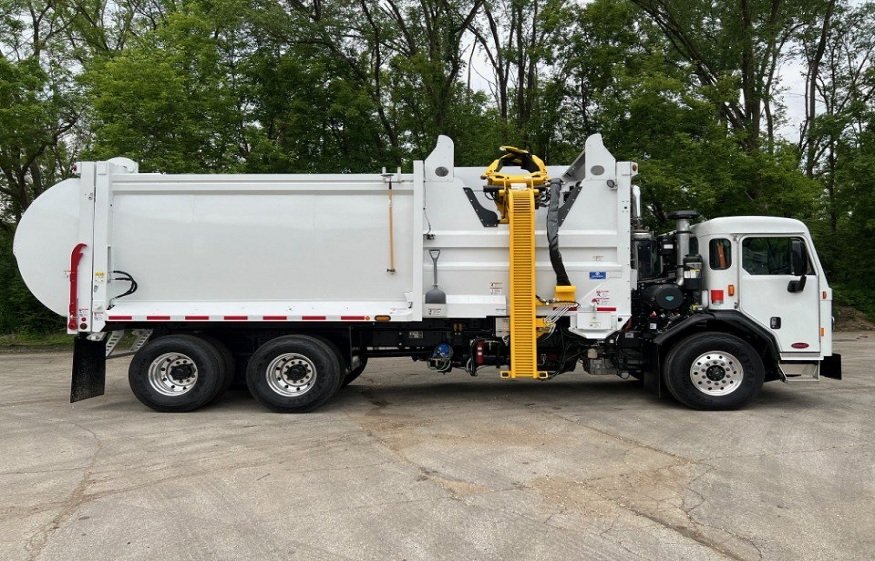
Garbage trucks are available in several configurations, including rear loaders, front loaders, and side loaders. Each design is intended to support different collection methods.
Rear loaders can be useful for operations involving manual or assisted loading from behind the vehicle. Front loaders are commonly used for commercial dumpsters and can provide efficient container lifting from the front. Side-loading configurations can be particularly useful for routes designed around automated or semi-automated collection.
The best configuration depends on the company’s existing container system, route layout, workforce, and customer requirements. Fleet managers should evaluate how the truck will integrate with current collection procedures rather than choosing a configuration based solely on popularity.
Evaluate Payload Capacity
Payload capacity is one of the most important specifications to examine. A truck needs to carry enough material to complete its routes efficiently without exceeding legal or manufacturer-specified limits.
Consider both volume and weight. A large truck body may provide substantial space, but dense materials can cause the vehicle to reach its weight limit before the body is full.
Analyzing historical route data can help determine the appropriate capacity. Companies should also consider anticipated growth. Selecting a vehicle with sufficient capacity for future collection volumes may prevent the need for premature fleet expansion.
Examine the Compaction System
Compaction directly affects how much waste a truck can transport. An effective compaction system can compress collected materials and maximize the available body space.
When comparing garbage trucks, consider compaction cycle time, system design, controls, maintenance requirements, and compatibility with the types of materials being collected.
Efficient compaction can help reduce trips to disposal or transfer facilities. For high-volume commercial routes, this can translate into better use of driver time, fuel, and vehicle availability.
Consider Route Conditions
Not every garbage truck operates under the same conditions. Route characteristics can have a significant influence on vehicle selection.
Urban routes may involve frequent stops, narrow streets, traffic congestion, and limited maneuvering space. Industrial routes may involve heavier loads and larger collection containers. Rural or extended routes may place greater emphasis on fuel capacity, durability, and highway performance.
Fleet managers should examine the terrain, road quality, traffic patterns, average route length, and number of daily collection points before selecting a truck. Matching the vehicle to its operating environment can improve both productivity and longevity.
Assess Maintenance and Serviceability
A garbage truck works in demanding conditions, so maintenance should be considered before purchase rather than after problems occur. Fleet managers should understand the vehicle’s routine service requirements and determine whether their existing maintenance team can handle them.
Easy access to key components can make routine inspections and repairs more efficient. Companies should also investigate parts availability and local technical support.
Preventive maintenance can help identify worn components before they cause major failures. A truck that is easy to service can potentially spend more time on routes and less time in a repair facility.
Research Used Truck Condition Carefully
Used garbage trucks can provide an attractive alternative for businesses that want to expand their fleet while controlling initial capital costs. However, condition should be evaluated carefully.
Businesses researching McNeilus garbage trucks for sale should examine the truck’s service history, mileage or operating hours, engine and transmission condition, hydraulic components, body condition, tires, brakes, electrical systems, and collection equipment.
A detailed inspection can reveal potential repair requirements that may not be obvious from photographs or a basic listing. Maintenance records are also valuable because they provide insight into how consistently the vehicle has been serviced.
The goal is to determine the truck’s total value rather than simply finding the lowest purchase price.
Consider Operator Safety and Ergonomics
Garbage collection involves heavy equipment and busy working environments, making operator safety an important purchasing factor.
Fleet managers should evaluate cab visibility, mirrors, cameras, lighting, braking systems, access steps, control placement, and other safety-related features. Ergonomic controls can also make repeated collection tasks easier for operators.
A comfortable and well-designed cab may contribute to reduced fatigue during long routes. This can support both employee satisfaction and operational consistency.
Compare Fuel and Operating Costs
The purchase price is only one part of a truck’s financial impact. Fuel, maintenance, repairs, insurance, tires, and downtime can contribute substantially to total ownership costs.
Fleet managers should estimate expected operating expenses over the vehicle’s anticipated service life. Route length, traffic, load weight, idling, and driving patterns can all influence fuel consumption.
A vehicle with a slightly higher purchase price may provide better overall value if it delivers greater productivity, reliability, or efficiency.
Check Fleet Compatibility
A new garbage truck should fit into the company’s existing fleet wherever possible. Using vehicles with familiar controls, similar maintenance procedures, and readily available parts can simplify fleet management.
Compatibility with existing containers and collection equipment is equally important. Before purchasing, confirm that the truck can safely and efficiently handle the containers used by customers.
Fleet standardization can also simplify driver training and help mechanics become familiar with common systems.
Evaluate Parts and Equipment Support
Access to parts and technical assistance can have a significant impact on uptime. Even reliable garbage trucks eventually require maintenance and replacement components.
Before purchasing, determine how easily common parts can be sourced and whether qualified technicians are available to provide service. Working with an experienced equipment provider can make the process of selecting and maintaining heavy-duty collection vehicles easier.
Businesses can consider providers such as Atlantic Heavy Duty when evaluating waste collection equipment and related heavy-duty vehicle solutions.
Plan for Future Expansion
Fleet decisions should support the company’s long-term goals. If a waste business expects to add customers, expand into new territories, or increase collection frequency, those plans should influence today’s purchasing decision.
A truck that meets current needs but lacks sufficient capacity or versatility for future operations may become a limitation. Conversely, selecting a vehicle with practical flexibility can help a company grow without immediately requiring another major investment.
Conclusion
Choosing the right garbage truck requires a detailed look at how a waste business actually operates. Collection methods, truck configuration, payload capacity, compaction performance, route conditions, maintenance requirements, safety features, fuel costs, and fleet compatibility all deserve careful consideration.
Read More : Long-Term Car Rental in Dubai: Save Money
Whether purchasing new or used equipment, businesses should evaluate total ownership value rather than focusing exclusively on the initial price. Options such as McNeilus garbage trucks for sale may suit certain commercial collection operations, but every vehicle should be assessed according to its specific condition and application.
With careful planning and support from experienced equipment providers such as Atlantic Heavy Duty, waste companies can make informed fleet decisions and invest in garbage trucks capable of supporting efficient, dependable collection operations for years to come.